AI Agent vs Chatbot: What Changes When Software Can Act
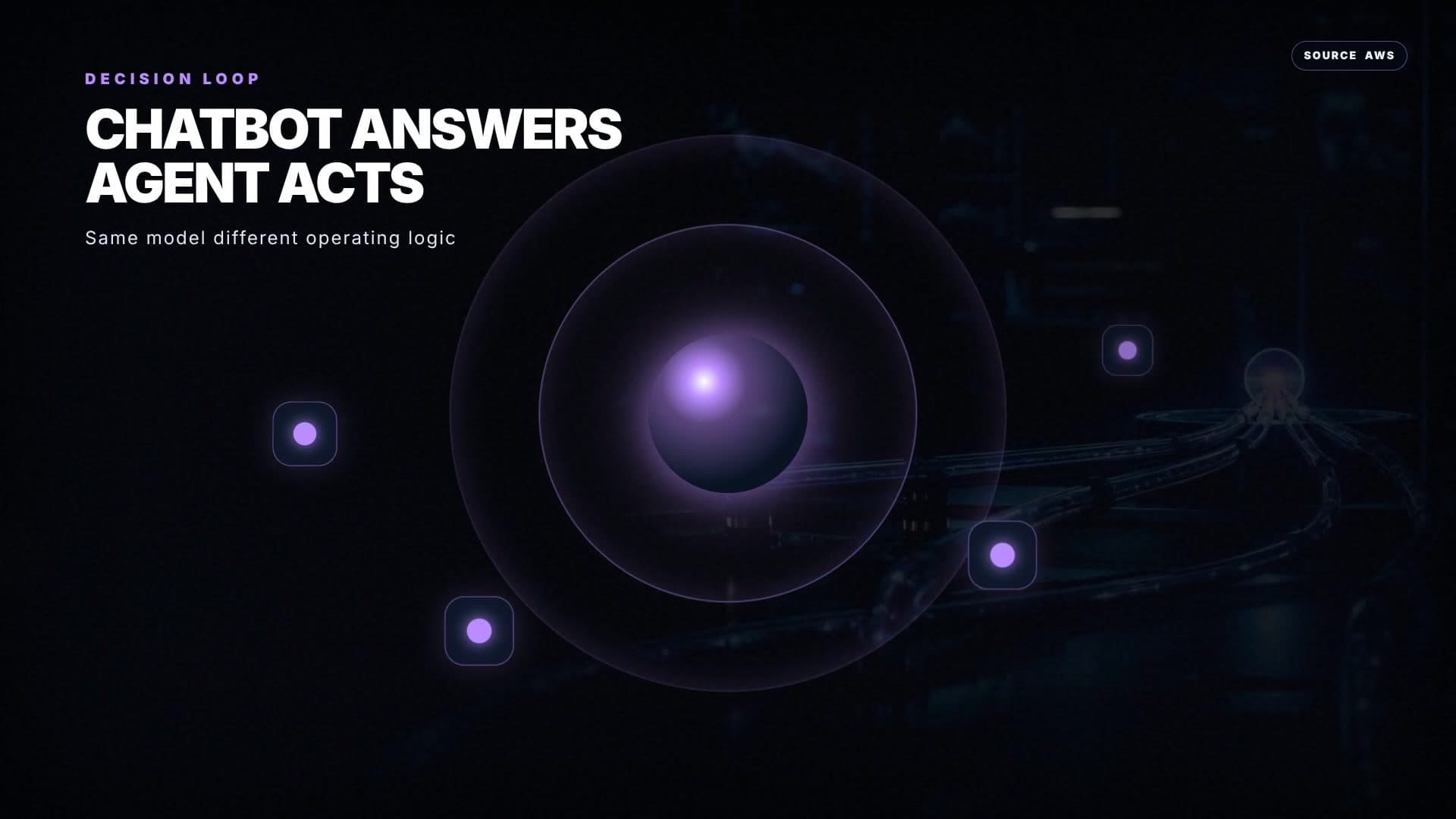
A practical guide to the difference between chatbots, workflows, and AI agents, including tool permissions, human approval, cost, latency, and a safer path to deployment.
PATech Labs News
Three times a week, fact-checked reporting on voice AI, automation, and applied AI across healthcare, fintech, and enterprise, by named authors, in three languages.
A practical guide to the difference between chatbots, workflows, and AI agents, including tool permissions, human approval, cost, latency, and a safer path to deployment.
Google is adding information about AI-created ad assets to My Ad Center. Here is what the feature does, what it does not prove, and how a small business can build a safer review workflow.

A practical way to separate inbound answering, outbound telemarketing, call recording, disclosure, and escalation before an AI receptionist goes live.

OpenAI introduced Presence, an enterprise platform for voice and chat AI agents that is deployed by OpenAI engineers rather than sold as self-service. Early customers include BBVA Mexico, SoftBank and IAG. We break down the launch facts and what they mean for banks, clinics and call centers.

Falling Google traffic no longer means demand is falling. Customers are getting answers from AI before they visit, so local businesses need current, consistent facts that machines can verify.

The U.S. labor market cooled but held steady in May 2026: 172,000 nonfarm jobs added, unemployment unchanged at 4.3%, with wages up 0.3% on the month and 3.4% over the year.
Enterprise AI agents are spreading fast, but Gartner and McKinsey data show a sharp gap between adoption, scale, and durable business value.
U.S. consumer prices rose 3.5% over the 12 months to June 2026, down from 4.2% in May, and fell 0.4% on the month. Core inflation eased to 2.6% as energy reversed, dropping 5.7% on the month after driving May's surge.


The FDA cleared UpDoc's type 2 diabetes software, the first medical device built on a patient-facing LLM. Here is what agentic clinical AI under regulation means for clinics and for teams building compliant AI agents.

Trase raised a 107 million dollar seed led by ARCH Venture Partners to scale AI agents for regulated healthcare back offices. Its Duke Health deployment routed faxes 7.1 times faster and freed 285,450 dollars in annual staff capacity, a sign that the near-term return in healthcare AI is administrative, not clinical.
In 2026 the FDA cleared the first clinical language model allowed to speak directly with a patient. A fresh funding wave and a new Medicare pathway show that regulated, voice-first healthcare AI is now shippable.

The Linux Foundation launched the x402 Foundation on July 14, 2026, with Visa, Mastercard, Stripe, Google, AWS and Coinbase backing an open standard that lets AI agents pay each other over HTTP. Here is what it is, the honest caveats, and what it means for anyone building agents that spend.

Senator Mark Warner's draft AI AGENT Act would create an FTC registry for trusted AI agents, tie each agent to a human operator, and require agents to act in the user's best interest. Here is what the draft says, and what it means for any business deploying AI agents.

Norm Ai raised $120 million at a $1.2 billion valuation, led by Khosla Ventures, to put AI agents into regulated legal and compliance work. Here is what the raise signals for banks and compliance teams building their own agents.